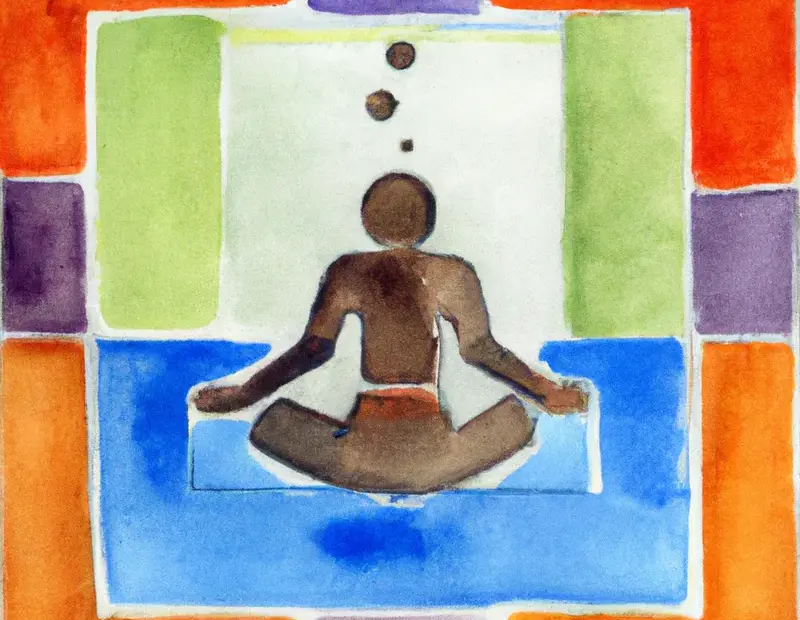
From the first breath of a newborn to the last breath of a dying person, to breathe is to live.
Maybe that’s why we marvel when wonderful things take our breath away — and remember the pain that can have exactly the same effect.
If you’re living with CRPS, you know how difficult it can be to breathe when the pain is intense, sensory overload kicks in, or allodynia is triggered. Even lying down can create stress on our bodies, making something as natural as breathing feel like an effort.
When Pain Takes Your Breath Away
When we’re in pain, our bodies can react as though we’re facing danger. Our nervous system switches into fight-or-flight mode, releasing stress hormones such as adrenaline. Our heart beats faster, muscles tense, and breathing becomes shallow or rapid. Sometimes we even hold our breath without realizing it.
It’s a wonderful survival mechanism if you’re being chased by a tiger.
Not quite as useful when the tiger is your bedsheet.
With CRPS, pain and sensory overload can keep the nervous system on high alert, even when there’s no actual danger. Pain creates stress, stress increases tension, and that heightened state can make the pain feel even more overwhelming.
It’s a cycle that can feed itself.
During my first five years of living with CRPS, the word I heard most often from my physiotherapist was “Breathe!”
I hadn’t even noticed I’d stopped breathing. I was so focused on the pain that somewhere along the way, I’d started holding my breath.
Apparently, I needed someone to remind me that breathing was part of the job.
The Relaxation Response: Your Body Has Another Setting
Thankfully, our nervous system has more than one setting.
Dr. Herbert Benson and colleagues at Harvard Medical School studied what became known as the Relaxation Response — a physiological state that counteracts some of the effects of the fight-or-flight response.
Think of it as your body’s built-in calming mechanism.
Instead of preparing for danger, your body begins to settle. Your breathing slows, your heart rate may decrease, and your muscles can begin to relax.
And one of the simplest ways to encourage this response is through breathing.
No special equipment, appointments, or complicated instructions required. You can practice almost anywhere, even discreetly. Like mindfulness, breathing exercises give us another way to help our nervous system settle when everything feels overwhelming.
The good news is that by practicing different breathing methods, you can build a little arsenal of tricks up your sleeve. Some may help when you’re overwhelmed, others when you’re trying to fall asleep, or when you feel a flare beginning to climb.
After we go through these methods, I’ll share a little tweak I discovered accidentally that has helped me through episodes of severe pain.
Breathing Basics
The great thing about breathing exercises is that the more you practice, the easier they become.
You don’t have to wait until you’re in terrible pain to try them. In fact, practicing when you’re feeling relatively comfortable makes it easier to use them when you really need them.
Over time, you’ll become more familiar with slowing and deepening your breathing, and the exercises may begin to feel like second nature.
Find a comfortable position, relax your shoulders, and give yourself a few minutes without distractions if possible.
There’s no competition here. Nobody gets a medal for the longest breath.
Reduce Sensory Overload
If you’re feeling overwhelmed, try closing your eyes while you breathe. By shutting out some of the visual stimulation around you, you may find it easier to focus on your breathing and help your body settle.
Sometimes I even cover my head with a light blanket to block out both light and noise. It’s my own little retreat from the world when everything feels like too much. Just make sure your nose and mouth remain uncovered so you can breathe freely.
Sometimes giving your nervous system one less thing to deal with can make all the difference.
Breathing Exercises
1. Box Breathing
Finding a little structure when everything feels chaotic.
Box breathing is a simple technique that uses four equal phases of breathing. Imagine tracing the four sides of a square as you breathe.
How to try it:
- Breathe in slowly for a count of four.
- Hold your breath for four.
- Breathe out for four.
- Pause for four before taking your next breath.
Repeat the cycle several times.
You can shorten or lengthen the counts to suit yourself. The idea is to create a steady rhythm that gives your mind something simple to focus on while your body begins to relax.
2. Deep Breathing
Giving your body a little breathing room.
When we’re stressed or in pain, we often take short, shallow breaths, using the muscles of our upper chest and shoulders.
Deep breathing encourages us to use the diaphragm, the large muscle beneath our lungs that does much of the work of breathing.
How to try it:
- Sit or recline comfortably and relax your shoulders.
- Breathe in slowly through your nose, allowing your abdomen to expand.
- Exhale gently, letting the air flow out.
- Continue for a few minutes, allowing your breaths to become slower and deeper.
You don’t need to force anything. Just enjoy the feeling of taking a full, comfortable breath.
Some instructions suggest placing a hand on your abdomen to feel it rise and fall. If you’re living with allodynia, you can happily skip that part. Your diaphragm will manage without supervision.
3. Rhythmic Breathing
Finding your own rhythm — and gradually slowing things down.
This is one of my favorites because it’s simple, discreet, and you can do it practically anywhere.
Start by breathing in slowly for a count of three, then breathe out for a count of four.
As you practice, gradually increase the counts. Try breathing in for four and out for six, then perhaps five and seven.
The idea is to take longer, deeper breaths, allowing your body to slow down and relax. Slower breathing can have a calming effect on the nervous system, and with practice, what initially felt like a long breath may become quite natural.
There’s no magic number to reach. Find a rhythm that works for you and enjoy that lovely feeling of your body beginning to settle.
Give Your Breath a Voice
My Accidental Discovery
Now for my little discovery.
One day, quite by accident, I found that adding a soft sound to my exhale seemed to help my body relax much faster.
Nothing elaborate. Just a gentle hum or a low “oooooh” as I breathed out.
What fascinated me was that my body seemed to find its own sound, a vibration that somehow spoke directly to the vibration of the pain.
It was as though the sound and the pain were having a conversation. And for once, the pain wasn’t doing all the talking.
Why We Make Sounds When We’re in Pain
Think about it. When you stub your toe, what comes out of your mouth?
“OW!”
We groan, moan, sigh, and occasionally produce language that would make our grandmothers blush.
It turns out there may be a good reason for that.
Researchers have actually studied vocalization and pain. One experiment found that people who said “ow” could tolerate a painful stimulus longer than those who remained silent.
Singing has also been investigated as a way to help people cope with persistent pain. It combines breathing, sound, rhythm, and emotional expression, all of which may contribute to the experience.
Perhaps those instinctive sounds aren’t simply expressions of pain. They may also be part of how we cope with it.
What About the Vagus Nerve?
There’s another interesting connection.
The vagus nerve plays an important role in regulating our heart rate, breathing, and the parasympathetic nervous system, which helps our bodies return to a calmer state.
Branches of the vagus nerve also control most of the muscles involved in producing our voice.
When we hum or make a gentle sound while exhaling, we combine vocal activity with slow, controlled breathing. Researchers are exploring how these practices influence autonomic nervous system activity.
The connection between vocalization, breathing, and relaxation is fascinating, although scientists are still investigating exactly how these effects work.
Yoga Has Been Doing This for Centuries
You’ve probably heard the familiar “OM” sound associated with yoga and meditation. That long, drawn-out “ooooommm” isn’t just for atmosphere.
Yoga has been combining breathing and sound for centuries. Chanting OM involves a long, controlled exhale accompanied by a gentle vibration.
There’s even a breathing technique called Bhramari, or humming bee breath, where you make a soft humming sound as you breathe out.
Researchers have been exploring how these practices affect breathing, heart rate, and the nervous system, including their possible role in promoting relaxation.
I knew none of this when I stumbled upon my own little trick. I simply discovered that adding a soft sound to my exhale seemed to help my body settle faster, particularly when the pain was intense.
Sometimes our bodies figure things out before we understand the science behind them.
Give It a Try
The next time you’re dealing with intense pain or a CRPS flare, give yourself a few minutes to breathe.
Take slow, deep breaths, and as you exhale, allow yourself to make a gentle humming or “oooooh” sound.
Play with the pitch a little. See whether your body naturally gravitates toward a particular sound.
It doesn’t have to be loud. You can do it quietly enough that nobody notices.
For me, there’s something about that gentle vibration that seems to meet the pain where it lives.
Keep going for a few minutes. You may find that the pain feels a little less overwhelming, your muscles begin to relax, or your whole body settles down a notch.
It won’t make all your pain go away, but maybe just enough that you can get through it without added anxiety.
A Little Breathing Room
Living with CRPS can make us feel as though our bodies have taken control of everything, including something as basic as breathing.
But breathing is also something we can consciously work with.
Whether it’s box breathing, a few long, deep breaths, finding your own rhythm, or adding a gentle hum, these are simple tools you can carry with you wherever you go.
They won’t replace medical treatment, and they certainly won’t solve everything.
But they may help you find a little calm in the middle of the storm.
Sometimes all we need is a little breathing room.
Scientific References
References to be linked and verified before publication.
- Benson, H., Beary, J. F., & Carol, M. P. (1974). The relaxation response. Psychiatry, 37(1), 37–46.
- Zaccaro, A., et al. (2018). How Breath-Control Can Change Your Life: A Systematic Review on Psycho-Physiological Correlates of Slow Breathing. Frontiers in Human Neuroscience, 12, 353.
- Swee, G., & Schirmer, A. (2015). On the Importance of Being Vocal: Saying “Ow” Improves Pain Tolerance. The Journal of Pain, 16(4), 326–334.
- Bernardi, L., et al. (2001). Effect of rosary prayer and yoga mantras on autonomic cardiovascular rhythms: Comparative study. BMJ, 323, 1446–1449.
- Kuppusamy, M., et al. (2018). Effects of Bhramari Pranayama on health — A systematic review. Journal of Traditional and Complementary Medicine, 8(1), 11–16.