If you’re considering Scrambler Therapy for CRPS or another form of chronic neuropathic pain, chances are you’ve already tried more than a few treatments.
Medications, physiotherapy, hydrotherapy, perhaps even invasive procedures such as nerve blocks or spinal cord stimulation (SCS).
Some may have helped. Others may have offered only temporary relief, or none at all.
The frustrating reality is that many treatments for chronic neuropathic pain focus on managing symptoms or blocking pain signals rather than resolving the underlying problem. Medications can have side effects, and some procedures are invasive, with their own risks and limitations.
And after all that, you’re still living with severe pain.
Despite advances in pain medicine, the understanding of chronic pain is still incomplete, particularly when it comes to complex conditions like CRPS. Much more is known about how pain works than in the past, but finding treatments that provide lasting relief remains a challenge.
A New Way to Approach Pain
What if, instead of simply trying to block pain signals, we could change the information the nervous system receives?
That’s the idea behind Scrambler Therapy.
Developed by Italian researcher Professor Giuseppe Marineo, Scrambler Therapy is a non-invasive treatment that uses specially designed electrical signals delivered through electrodes placed on the skin.
The technology is based on the idea of providing the nervous system with alternative sensory information, sometimes described as non-pain information, with the aim of changing how pain signals are transmitted through the nervous system and perceived by the brain.
One of its biggest advantages is that it’s non-invasive. There are no needles, injections, surgery, or implanted devices. Treatment is generally well tolerated, with few reported side effects.
Clinical studies have reported promising results, including substantial pain relief in some patients. However, results vary, and not everyone responds.
Scrambler Therapy was developed primarily to treat neuropathic pain. It isn’t intended as a treatment for every kind of chronic pain.
What Happens During a Scrambler Therapy Session?
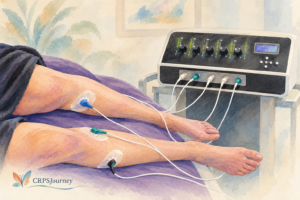
Scrambler Therapy isn’t simply a matter of attaching electrodes and turning on a machine. Treatment is individualized, and your feedback plays an important role.
Every session begins with a fresh assessment of your pain. Your clinician will ask where you’re experiencing pain, how intense it is, and whether anything has changed since the previous session. This daily pain mapping helps guide electrode placement.
Small electrodes are placed on areas of skin that aren’t painful, usually near the painful region.
As pain and sensitivity decrease over the treatment series, the clinician may gradually move the electrodes closer to areas that were previously too painful to treat.
This process is called dynamic mapping. Electrode placement is reassessed each day based on changes in your pain and sensitivity, allowing the treatment to evolve as you respond.
During treatment, you’ll feel electrical sensations that should be comfortable rather than painful. Many patients experience a reduction in pain while the machine is running, sometimes quite substantial. Your clinician may adjust the electrodes or stimulation based on what you’re feeling.
Building on Each Session
Scrambler Therapy is usually delivered over a series of consecutive treatment days.
At first, pain relief may last only while the machine is running, or for a short time afterward. With repeated sessions, the aim is for the relief to last progressively longer—several hours, then potentially through the night, and ideally for a full 24 hours between treatments.
Not everyone reaches zero pain, and not everyone experiences progressively longer relief. Some patients respond quickly, others need more sessions, and some may not respond at all.
But success doesn’t necessarily mean becoming completely pain-free.
Scrambler Therapy may also help reduce allodynia—pain caused by sensations that wouldn’t normally hurt, such as clothing touching your skin, the pressure of a blanket, or changes in temperature.
For someone living with severe chronic pain, even a partial reduction in pain or allodynia can be life-changing. Being able to sleep more comfortably, wear ordinary clothes, move more freely, or simply enjoy everyday activities again can make an enormous difference.
How Many Sessions Will You Need?
A typical Scrambler Therapy course begins with 10 sessions, usually scheduled on consecutive weekdays.
However, 10 sessions aren’t always enough, particularly for people living with complex or longstanding CRPS. Some patients may need additional sessions, depending on their response, the areas affected, and how long the pain relief lasts between treatments.
Progress should be assessed throughout the treatment course rather than relying on a fixed number of sessions.
The goal isn’t simply to complete 10 treatments. It’s to achieve meaningful, lasting improvement in pain, sensitivity, and everyday function.
How Effective Is Scrambler Therapy?
Research into Scrambler Therapy has produced encouraging results, particularly for people living with neuropathic pain.
A 2025 analysis of eight randomized clinical trials, involving 350 patients, found that Scrambler Therapy reduced pain by an average of approximately three points on a ten-point pain scale in the short term. Some improvements continued for several months, although longer-term results remain less certain.
Research from Johns Hopkins has also reported substantial pain reduction in some patients with neuropathic pain following a stroke.
In 2026, consensus guidance published in Pain Medicine recognized Scrambler Therapy as a potential treatment option for selected patients, including those living with CRPS.
These findings are encouraging, but they don’t mean everyone will respond or that pain relief will necessarily be permanent.
Studies have also highlighted the need for more consistent treatment protocols, larger clinical trials, and longer follow-up periods.
What we do know is that some patients experience meaningful pain relief, sometimes accompanied by improvements in everyday function. For people living with severe chronic pain, that possibility matters.
It’s also important to remember that results from studies involving one neuropathic pain condition don’t necessarily predict outcomes for people living with CRPS.
Does Scrambler Therapy Cure CRPS?
No. Scrambler Therapy is primarily a treatment for pain, not a cure for CRPS.
CRPS is a complex condition involving much more than pain. It can affect circulation, skin temperature and color, swelling, muscle rigidity, movement, and sensation.
Although Scrambler Therapy primarily targets pain, some patients also experience improvements in allodynia, mobility, and other CRPS symptoms. These improvements can be significant, but they don’t necessarily mean the underlying condition has resolved.
Scrambler Therapy may help reduce painful hypersensitivity, including allodynia, but not all sensory symptoms respond equally. According to Professor Giuseppe Marineo, who developed Scrambler Therapy, numbness and loss of sensation tend to respond less effectively than pain.
This is an important distinction for people living with CRPS, where pain, hypersensitivity, and reduced sensation can coexist.
The goal is to reduce pain and improve quality of life, not to promise a cure for every aspect of CRPS.
How Long Does the Pain Relief Last?
One of the most encouraging aspects of Scrambler Therapy is that pain relief can continue after the treatment course has ended.
Some patients report complete remission of their pain, while others achieve a meaningful reduction in pain intensity or sensitivity.
How long the improvement lasts varies greatly from person to person.
For some, relief may last several months or even years. Others find that their pain gradually returns sooner, or that they need additional treatment to maintain the benefits.
Follow-up treatments, often called booster sessions, may help when pain begins to return. Some providers offer a short series of one to three sessions, while others may recommend a longer course depending on the patient’s response.
There is no guarantee of permanent relief, and researchers are still working to understand which patients are most likely to experience lasting benefits.
My Experience with Scrambler Therapy
My First Session
After living with severe CRPS Type II for over 11 years, I experienced something I hadn’t thought possible.
After my very first Scrambler Therapy session, I stood barefoot on the floor.
I had arrived at the clinic in a wheelchair. After treatment, I walked out to the car using my crutches.
It wasn’t a cure, and my journey with Scrambler Therapy didn’t end there. But that first session showed me what even a reduction in pain and allodynia could make possible.
More Than Pain Relief
My improvements haven’t been limited to pain reduction. I’ve experienced approximately 80% improvement in allodynia, along with reduced muscle rigidity, better circulation, and improvements in skin color and temperature.
What’s particularly interesting is that these improvements haven’t all followed the same pattern. Some symptoms have gradually returned between treatment courses, while other improvements have lasted much longer.
Even when some of the pain returns, it doesn’t necessarily mean all the progress has been lost.
For me, the benefits of Scrambler Therapy go far beyond a number on the pain scale. They’ve changed what I’m able to do and how I experience everyday life.
Different People, Different Outcomes
I’ve seen firsthand how differently people can respond to Scrambler Therapy:
- My experience: Living with longstanding CRPS Type II, I’ve needed approximately 20 sessions every four to five months to maintain my improvements.
- Trigeminal neuralgia: A friend experienced a reduction in pain from 10/10 to 3/10 and is planning another week of treatment about a year after her initial course.
- CRPS remission: Another friend’s child achieved complete remission of CRPS pain following Scrambler Therapy two years ago and is now doing gymnastics.
Some people achieve remission. Others experience lasting pain reduction or need periodic treatments to maintain their progress. And not everyone responds.
The goal isn’t necessarily the same for everyone. What matters is whether treatment makes a meaningful difference in your life.
For me, Scrambler Therapy made me feel human again. I could finally start living more, instead of just trying to get through each day.
Are You a Candidate for Scrambler Therapy?
Scrambler Therapy can offer meaningful relief for some people living with neuropathic pain, but it isn’t suitable for everyone.
When you contact a Scrambler Therapy provider, they’ll typically ask you to share information about your diagnosis, where and how you experience pain, your current medications, and whether you have any implanted medical devices.
They may also ask for previous imaging, test results, or medical records to better understand your condition.
This information helps the provider determine whether Scrambler Therapy might be appropriate for you and whether there are any safety concerns to consider.
What Conditions Can Scrambler Therapy Help With?
Scrambler Therapy has been studied or used clinically for several conditions involving neuropathic pain, including:
- Complex Regional Pain Syndrome (CRPS Types I and II)
- Chemotherapy-induced peripheral neuropathy
- Post-surgical neuropathic pain
- Phantom limb pain
- Postherpetic neuralgia
- Peripheral neuropathy, including some cases of diabetic neuropathy
Some specialist providers also treat trigeminal neuralgia and other forms of neuropathic facial pain. These treatments require particular expertise and aren’t offered at every center.
It’s important to distinguish neuropathic pain from other forms of chronic pain.
For example, fibromyalgia is generally classified as a condition involving predominantly nociplastic pain, rather than neuropathic pain. Scrambler Therapy isn’t an established treatment for fibromyalgia, and results may differ from those seen in neuropathic conditions.
The presence of a diagnosis on this list doesn’t guarantee that Scrambler Therapy will be appropriate or effective for every patient.
Are There Reasons You Might Not Be Eligible?
Scrambler Therapy isn’t suitable for everyone. Before treatment, your provider will review several potential safety concerns:
- Implanted electronic devices: Pacemakers, defibrillators, and spinal cord stimulators may be contraindicated because of possible electrical interference.
- Other implants or cardiac conditions: Coronary stents and certain heart conditions require assessment against the device manufacturer’s safety instructions.
- Skin conditions: Wounds, irritation, or severe sensitivity may limit suitable electrode placement.
- Pregnancy: Safety has not been adequately established, so pregnancy requires specific consideration.
Always share your complete medical history, including any implanted devices, with your treatment provider. Eligibility should be assessed according to the manufacturer’s instructions for the device being used.
What About Your Medications?
Some Scrambler Therapy providers have specific recommendations concerning medications that affect the nervous system, including certain neuropathic pain medications and ketamine.
These recommendations aren’t identical across treatment centers, and the evidence about how individual medications affect treatment response is still developing.
Don’t stop or reduce prescribed medications on your own to prepare for Scrambler Therapy. Ask your provider about their medication protocol and discuss any proposed changes with your prescribing physician.
The important thing is to share an accurate list of your medications before treatment begins.
Preparing for Scrambler Therapy
If you’re considering traveling for treatment, a little preparation can make the experience easier.
Choose an Experienced Provider
Scrambler Therapy requires more than knowing how to operate the machine. Proper training, individualized electrode placement, and experience with your particular condition are important.
Ask how many CRPS patients the provider has treated, what results they’ve seen, and how they assess progress and adjust electrode placement throughout the treatment course.
Plan for Enough Treatment Time
Although a standard initial course often consists of 10 sessions, some patients with complex or longstanding CRPS may need additional treatment.
If you’re traveling, consider whether your schedule allows flexibility should your clinician recommend extending the course.
Travel with Support
Traveling with severe CRPS can be exhausting, particularly when pain, allodynia, and mobility limitations make everyday tasks more difficult.
If possible, consider traveling with someone who can help with luggage, transportation, meals, and other practical arrangements.
Staying close to the treatment clinic may also reduce unnecessary travel and fatigue.
Give Yourself Time to Rest
Some patients feel unusually tired after Scrambler Therapy sessions. Some experienced providers consider this an encouraging response to treatment, although fatigue alone doesn’t establish whether treatment is working.
I recommend allowing a few hours to rest after each session rather than planning a busy day.
Even when your pain improves, you may still need time to recover before continuing with your day.
Don’t Let Pain Relief Tempt You to Overdo It
One of the wonderful things about Scrambler Therapy is that you may suddenly find yourself able to do things that were previously too painful.
And believe me, the temptation to do more can be enormous!
But less pain doesn’t necessarily mean your body is ready for more activity.
During your treatment course, try to resist the urge to push your limits. Overdoing it can place additional stress on your body, trigger a CRPS flare, and make it harder to understand how you’re responding to treatment.
Give yourself permission to rest, even when you’re feeling better. There will be time to explore what you can do as your improvements become more stable.
Enjoy the relief, but don’t rush to test it.
Keep Track of Your Progress
During your treatment course, you may be asked to complete a short pain and symptom diary several times a day.
Some providers ask patients to record their observations three times daily, including pain intensity, where they’re experiencing pain, how long relief lasts, and any changes in symptoms.
For people living with CRPS, it’s also worth recording changes in allodynia, skin color, temperature, swelling, rigidity, and mobility.
These observations help your provider understand how you’re responding between sessions and make adjustments to your treatment.
Don’t focus only on your pain score. Improvements in sleep, movement, sensitivity, and everyday activities can be just as meaningful.
A New Hope for Living Beyond the Pain
For years, living with severe chronic pain can mean moving from one treatment to another, hoping that something will finally make a difference.
Scrambler Therapy offers a different approach, and for some people living with neuropathic pain, it can provide meaningful, lasting relief.
It isn’t a cure for CRPS, and it doesn’t work for everyone. But it offers something that can be difficult to find after years of unsuccessful treatments: real hope for significant pain reduction and a better quality of life.
For me, after more than 11 years of severe CRPS, Scrambler Therapy was the first treatment that gave me real hope of getting more of my life back.
Not because it made all my symptoms disappear, but because it gave me the opportunity to do things that pain had taken away.
Less pain. More possibilities. More living.
And ultimately, isn’t that what we’re all hoping for?
Scientific References
The following studies and publications provide additional information about Scrambler Therapy, its potential benefits, and the limitations of current research.
- Systematic Review and Meta-Analysis of Scrambler Therapy (2025)
Analysis of eight randomized clinical trials involving 350 patients with chronic neuropathic pain.
Read on PubMed - Scrambler Therapy for Central Post-Stroke Pain — Johns Hopkins (2024)
Randomized, sham-controlled study investigating pain relief in patients with central neuropathic pain.
Read on PubMed - Consensus Guidance on Scrambler Therapy (2026)
Published in Pain Medicine, examining clinical applications, patient selection, safety considerations, and limitations of the evidence.
Read the publication - Scrambler Therapy in an Adolescent With Refractory CRPS (2026)
A clinical case report describing treatment of severe Complex Regional Pain Syndrome Type I.
Read the publication - Scrambler Therapy for Neuropathic Pain After Spinal Cord Injury — Johns Hopkins (2026)
Two case reports describing different treatment responses, including outcomes following retreatment.
Read on PubMed - Why the Scrambler Therapy Evidence Base Has Not Converged (2026)
Review examining differences in treatment protocols, electrode placement, operator experience, and research methodology.
Read in the Journal of Clinical Medicine
Disclaimer: This article is intended for educational purposes and includes personal experiences. It is not medical advice. Scrambler Therapy may not be suitable for everyone. Treatment decisions, contraindications, and medication changes should be discussed with qualified healthcare professionals.